Whispers fly in my stomach
20241120 21:00
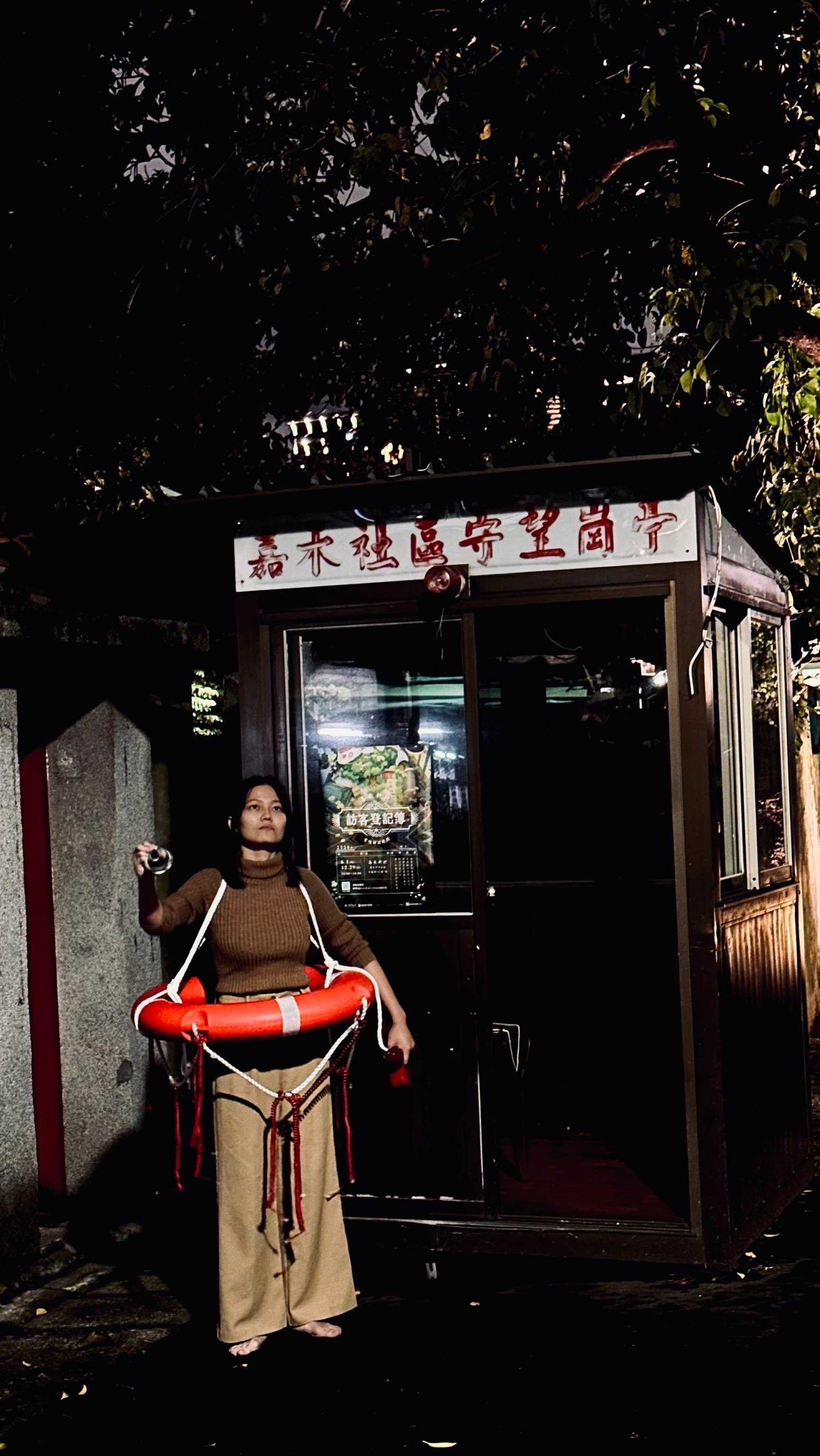

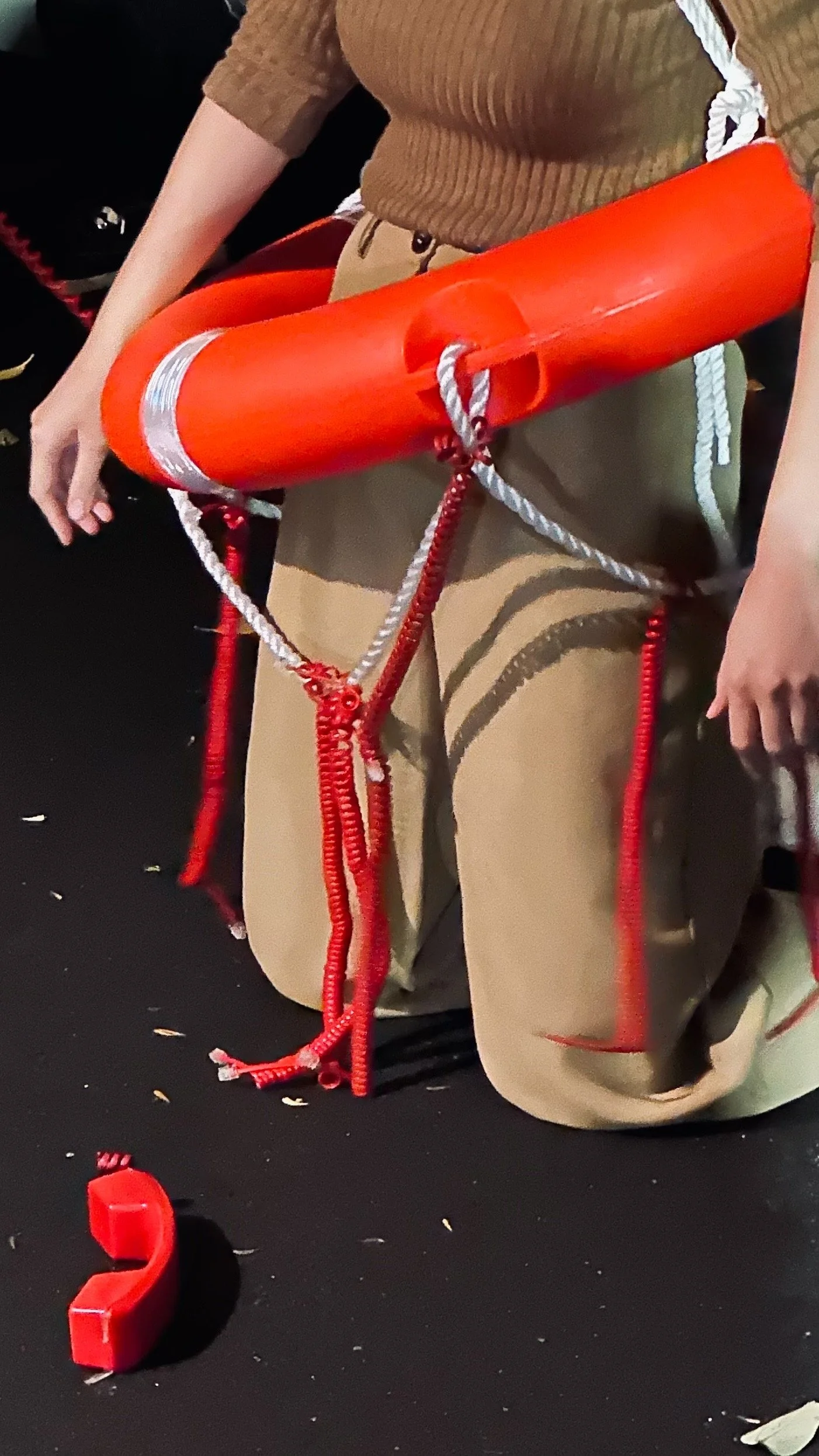
In the performance description, I wrote: “Repression can make you sick. Sickness can be contagious. Maybe if you pass it on to someone else, you’ll be cured? Let me call you. Pick up the phone, pick up the phone. Let me heal you. Alright?”
Jiahe New Village was a military base during the Japanese colonial era. In the early years after the Chinese Civil War, it was a communications factory, later housing military courts, and then a residence for senior military officers and their families. Eventually, it was designated as a disaster prevention park for urban redevelopment. Today, it’s a cultural site used for environmental theater.
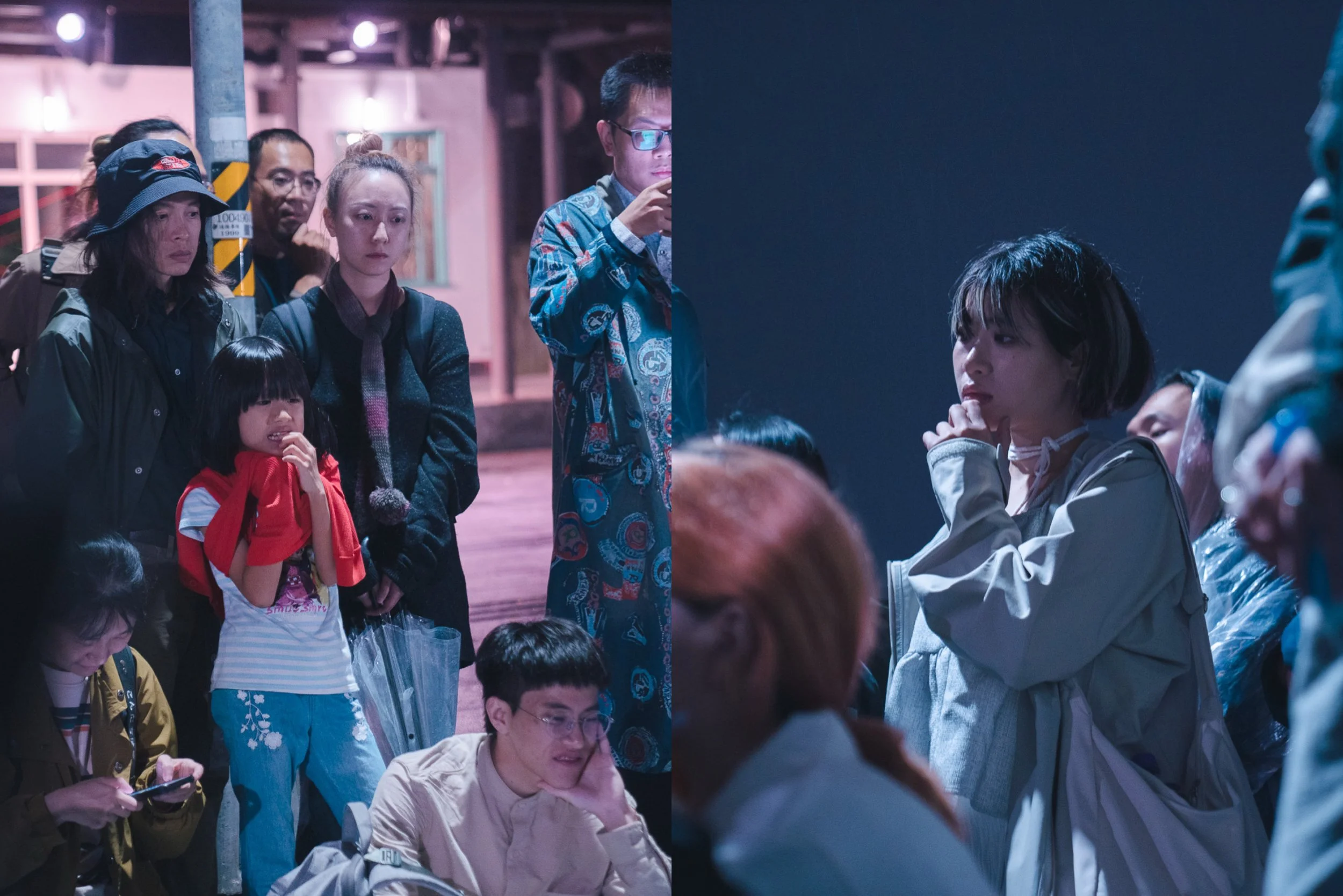
I wore a lifebuoy with over a dozen red coiled telephone cords tied to it. Barefoot, I stood in the entrance guard post and rang a handbell in a rhythm that mimicked a landline’s ringtone. People gathered in response to the sound. I stopped ringing and took out two old-fashioned red telephone handsets.


I approached a young man in khaki with glasses and a backpack. I asked, “Do you want to join me?” He said yes. I asked for his name, then knelt and tossed the two red handsets to the ground like divination blocks*, asking “Does [Name] want to join me?”— I looked up and interpreted the result, “You do.” I handed one of the cords on my lifebuoy to him, telling him he could tie it to his hand or hold it, but to try his best to protect the connection between us, not to let it break. I moved on, and he followed.
*Red divination blocks (or moon blocks) are used in folk ritual to answer yes-or-no questions.Next was a girl in glasses and a ponytail. She nodded to join. I tossed the handsets again and asked, “Does [Name] want to join?” Looking at them lying on the asphalt, I interpreted, “No.” The onlookers all laughed.
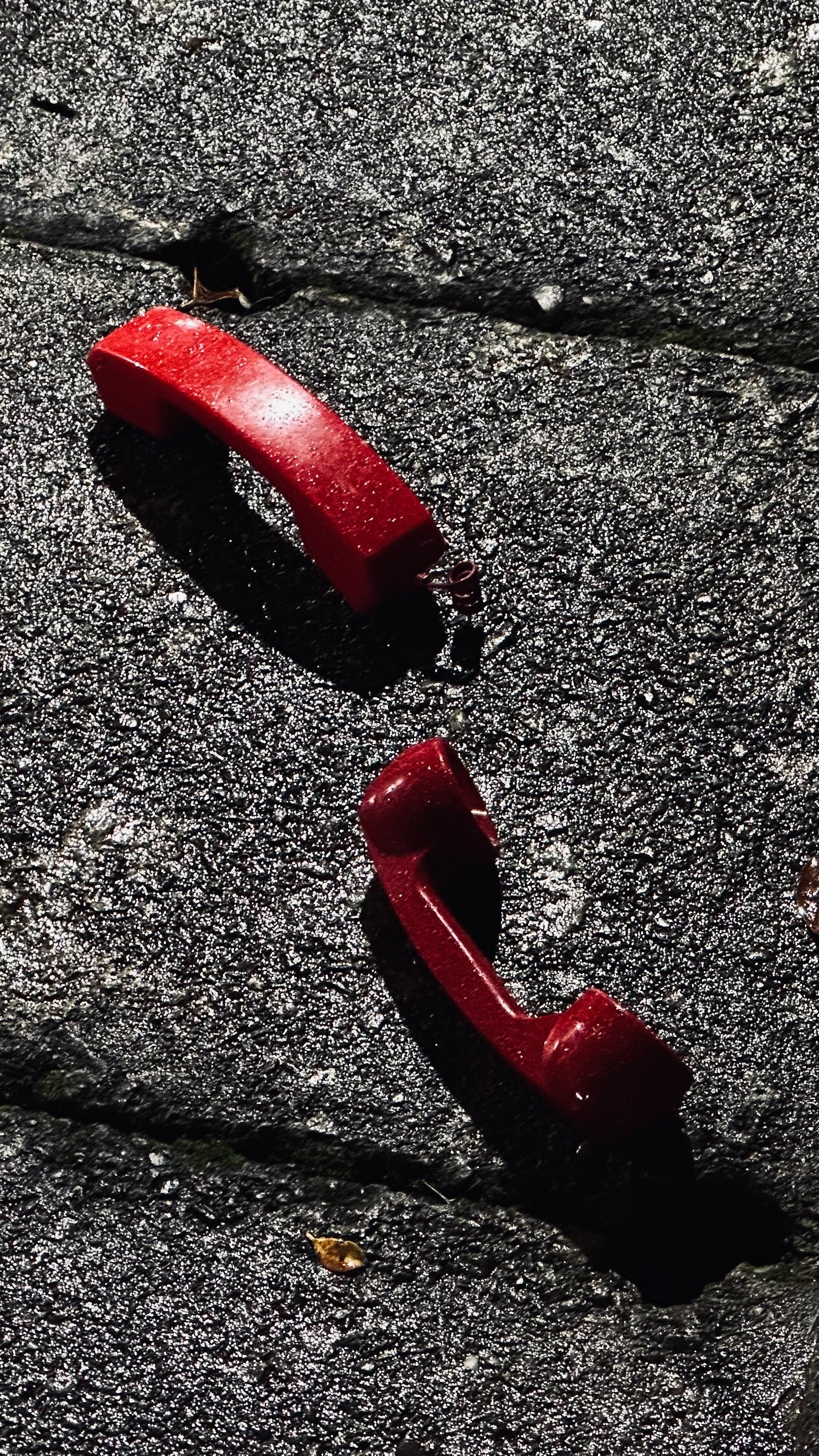
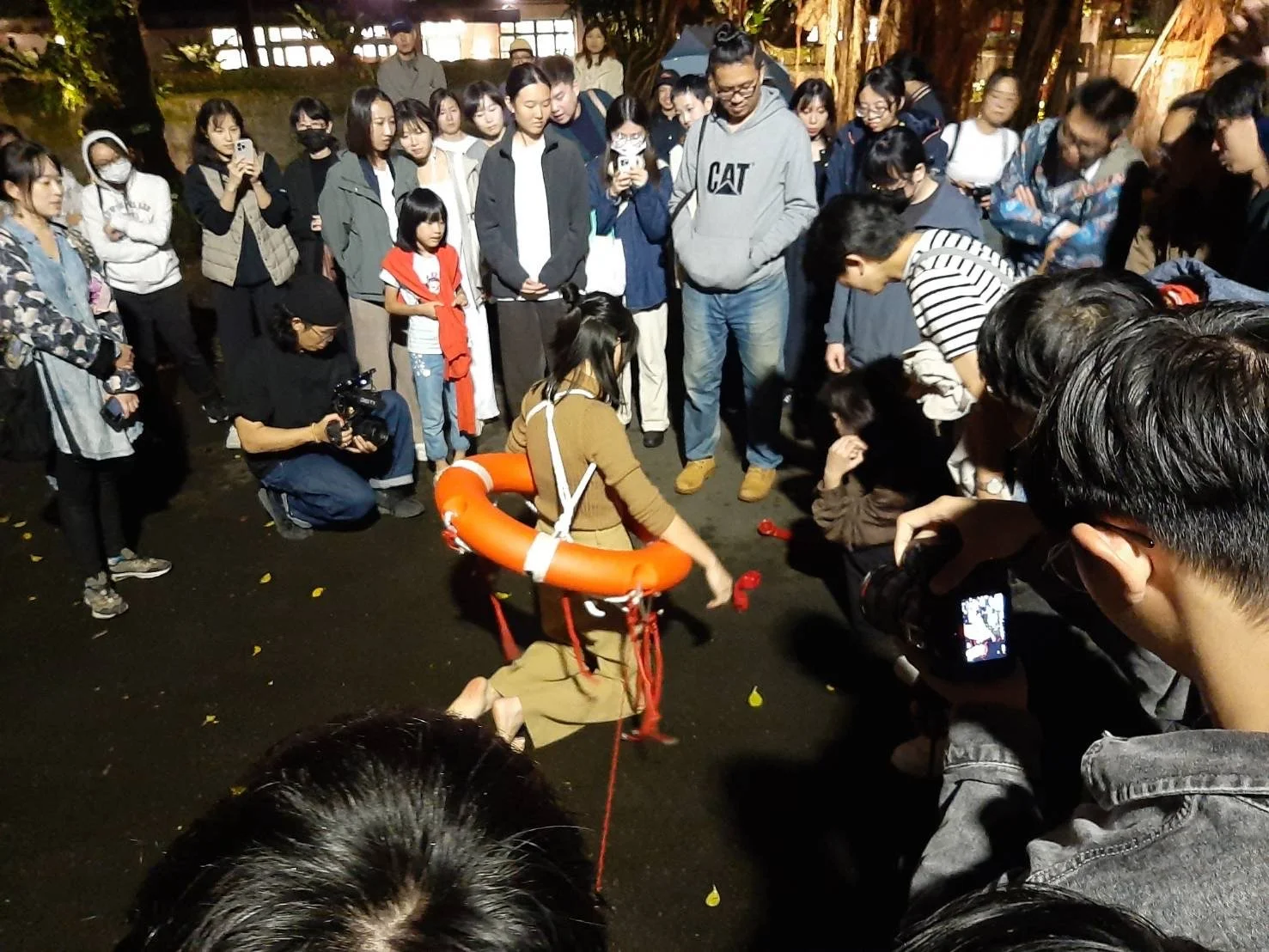
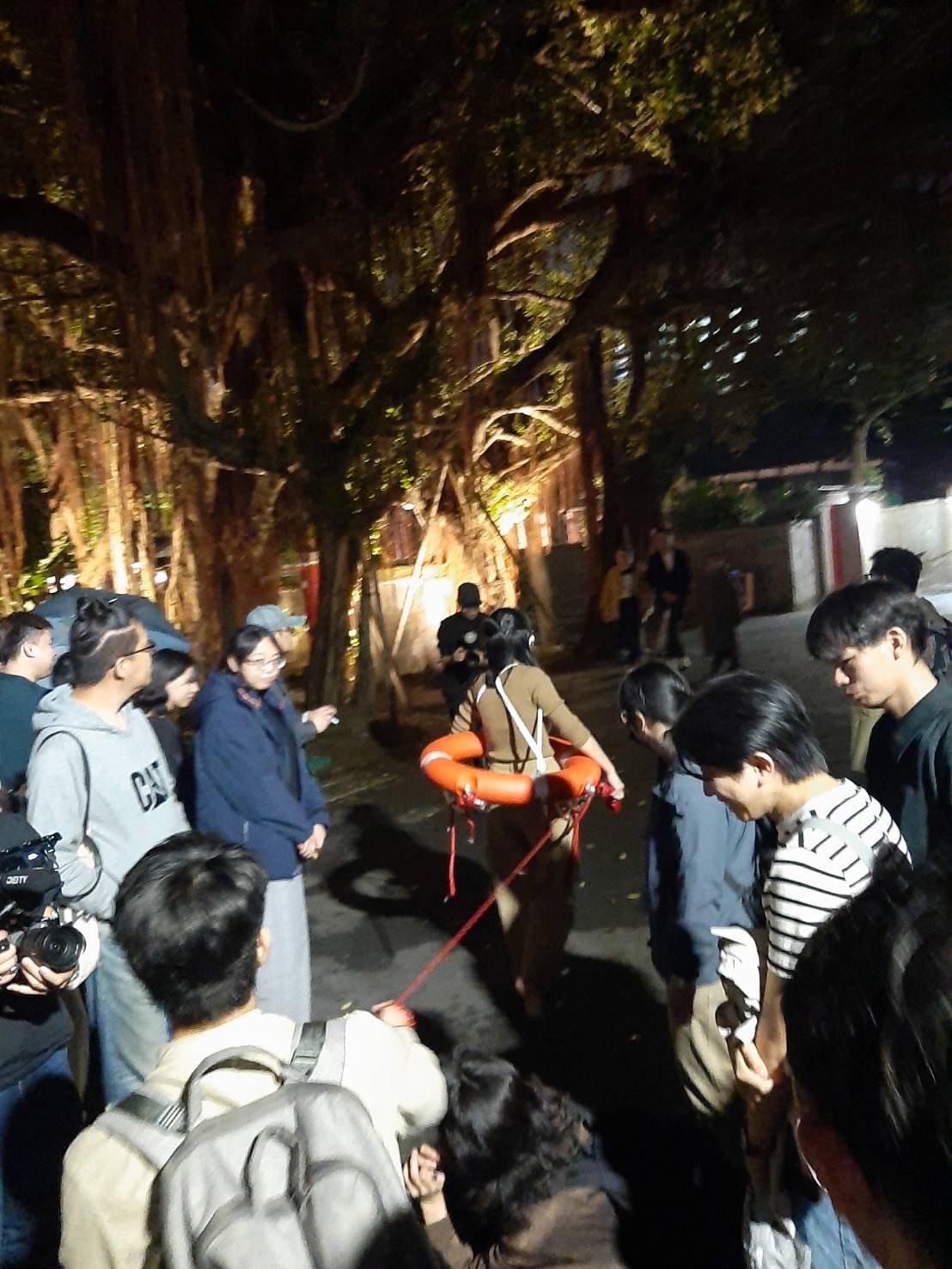
As I walked, I held one handset to my right ear as if answering a call. I stopped beside a man in blue walking alongside me and asked, “Do you want to pick up?” He did. I tossed the handsets. Someone in the audience immediately called out in Taiwanese, “No!” I tossed again. This time it was a yes.
Truthfully, I didn’t have any set rules for interpreting the handset combinations. I followed my intuition.
Sometimes, before I could even feel out the result myself, people in the crowd would already be shouting, “Yes! That’s a yes!” or “No way!” Sometimes I followed their communal reading. Sometimes I didn’t.

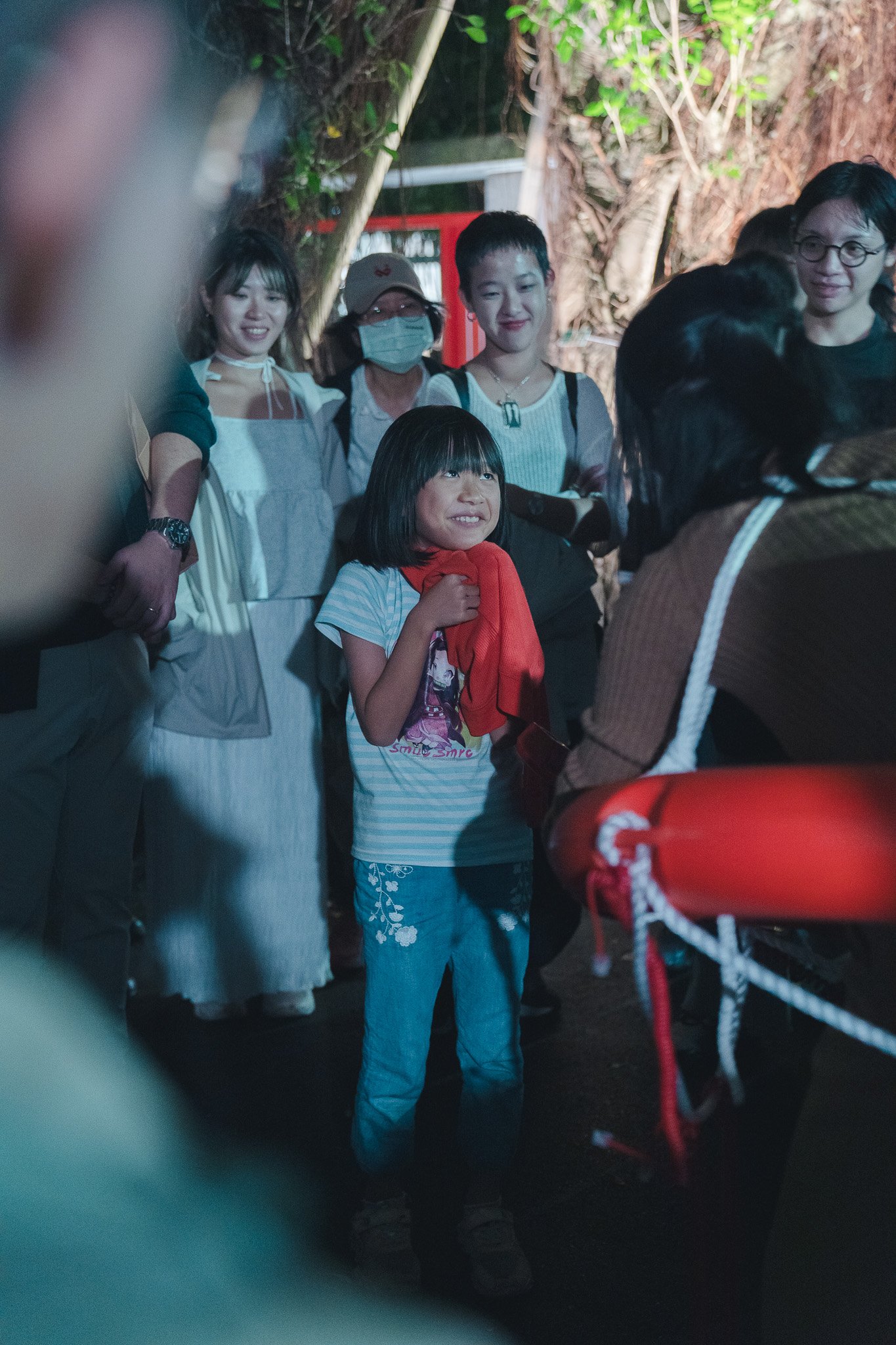
A girl in a red sweater, probably in elementary school, stood closest to me in the crowd. I stepped forward and asked if she wanted to join. She froze and shook her head shyly. I tossed the handsets and looked up: “Looks like you really don’t want to!” I smiled and kept walking through the village alleys.
A Western-looking man gave a name that sounded like “Shi-He,” which, in Mandarin, sounds just like the word for “suitable.” So I asked, “Is Shi-He suitable to join me?” And the answer was yes.
A woman in a baseball cap also got a “yes” and joined.
I handed the handsets to A-Chi, a Hong Kong woman also performing that night. The crowd called out “Yes!” She hesitated, “Yes?” I said, “Then it’s a yes!”, and she joined. The Taiwanese curator Joy picked up the phone. I gave her the right to toss, she joined too.
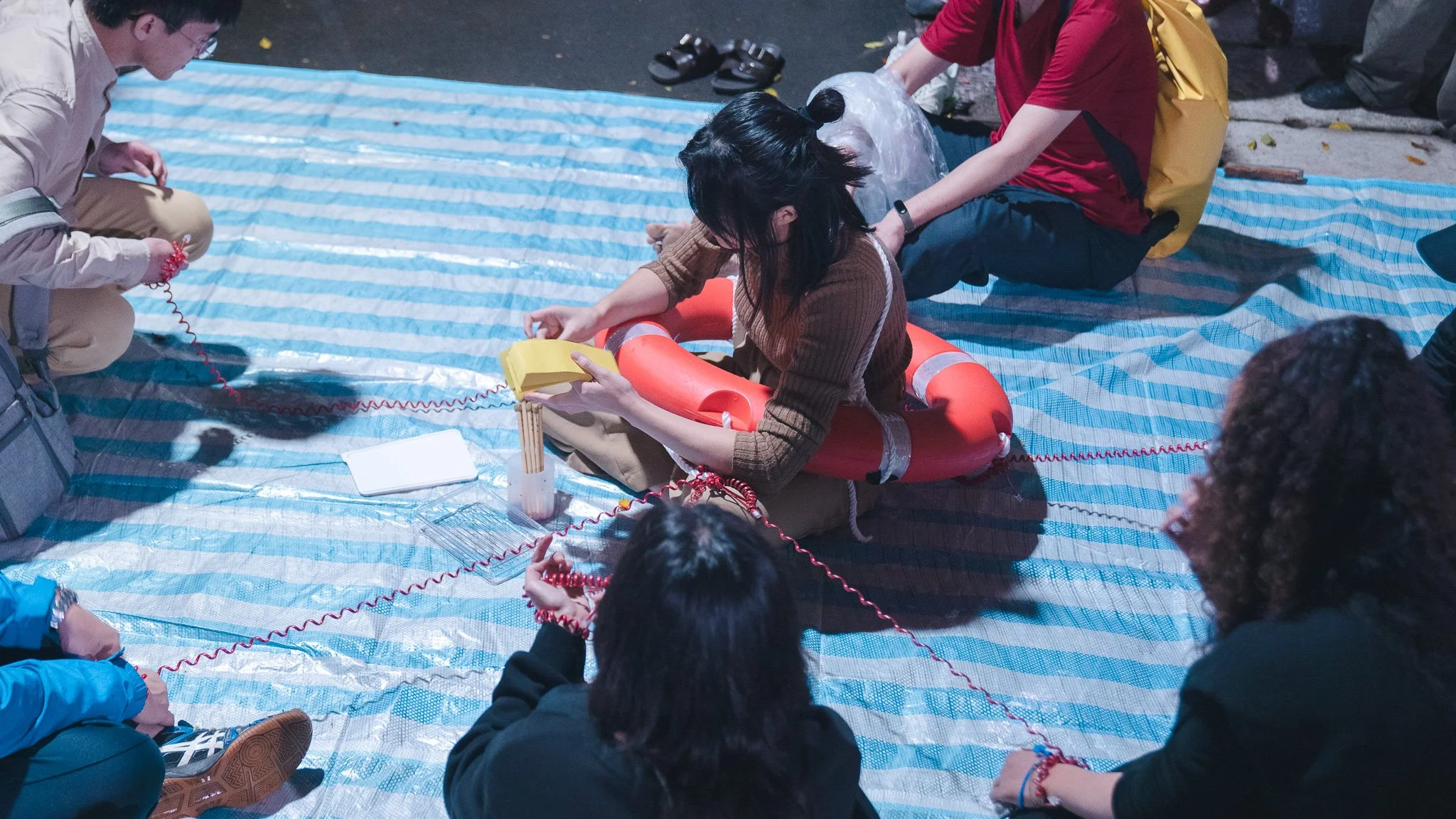
I hadn’t planned a specific number or combination of participants. Out of the dozen or so telephone lines, six people were now “on the line”: three men, three women—four from Taiwan, one from Hong Kong, one Western-looking. That felt about right. We walked toward the canvas.
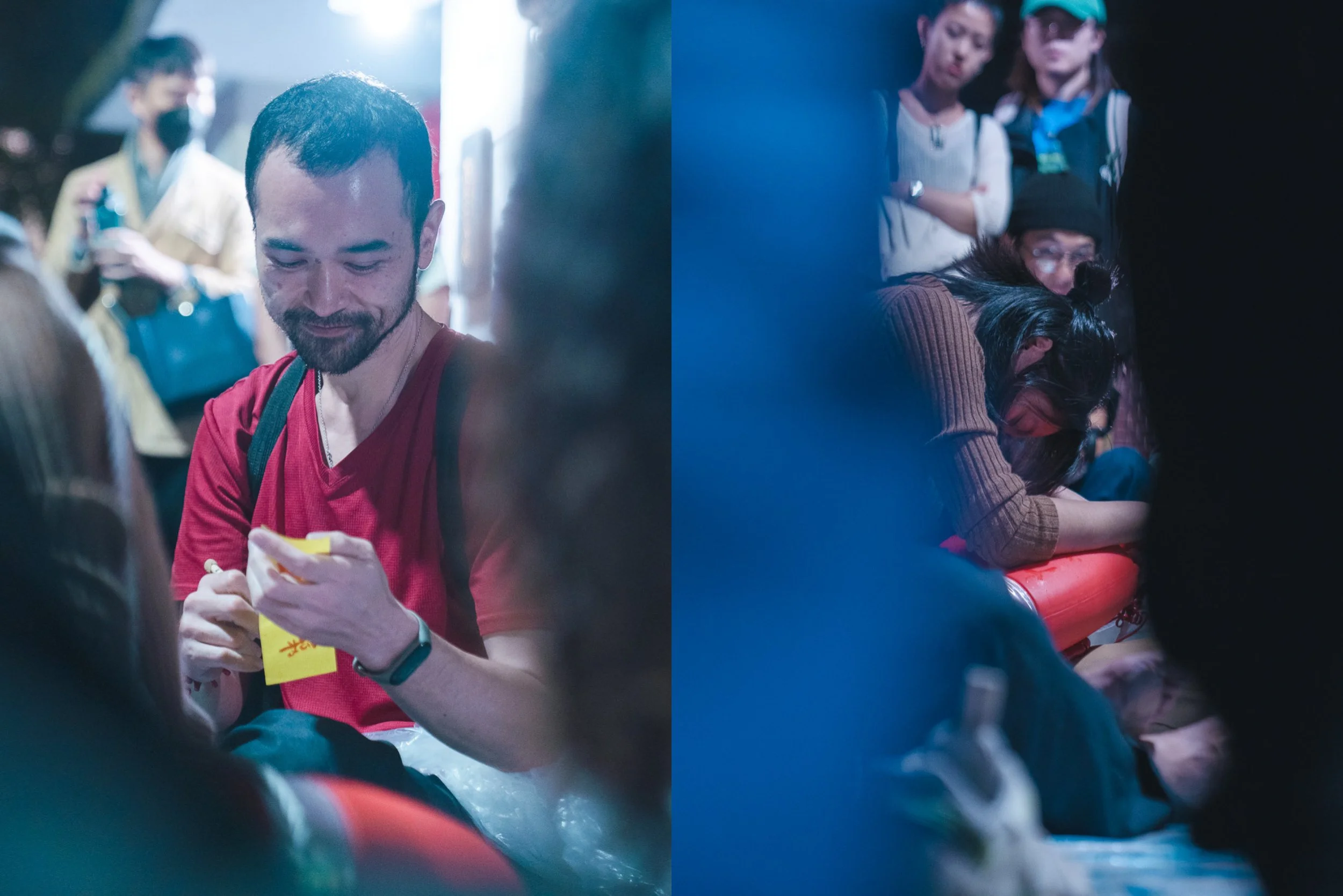
I took out traditional yellow talisman paper* and a brush filled with ink made from red yeast rice. Sitting at the center of the canvas, I invited the six people to gather around me. I asked them to write or draw anything on the talismans: words, thoughts, or feelings they wanted to say but couldn’t or didn’t know how to express.
*Yellow talisman paper is commonly used in Taoist folk rituals to write charms for protection, healing, or good fortune.
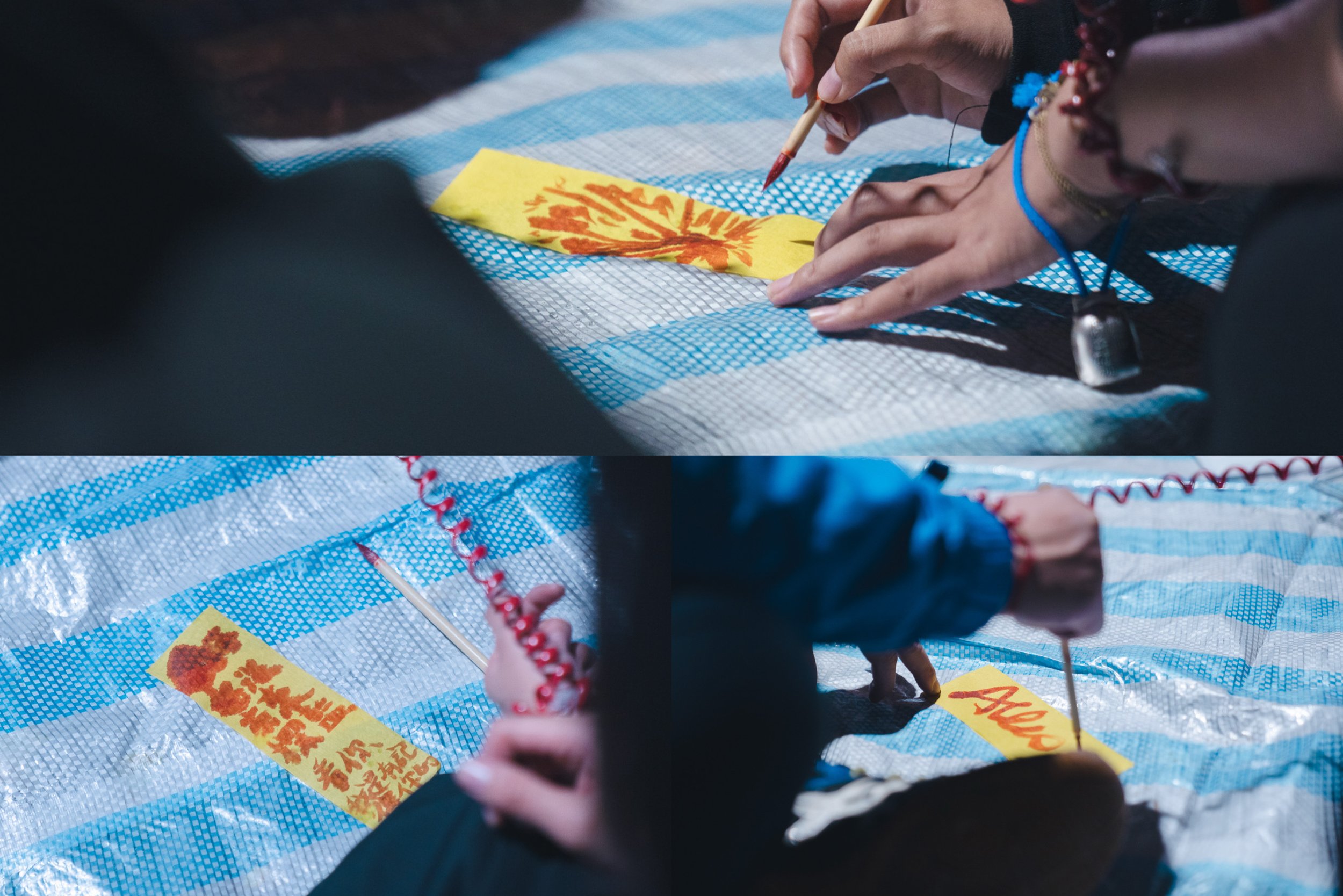


I began with the man in front of me. After confirming his name, I took the talisman from him and began to chew it. I maintained eye contact with him as I chewed and swallowed the talisman. Then, I shook his hand and untied the red cord from his wrist. I repeated this process with each of the six participants, one by one, to dissolve the physical connection between us.
Swallowing the talismans became increasingly difficult. The more I chewed, the drier my mouth became. I had to force my throat to swallow. A middle-aged man in the crowd offered me a bottle of water. I declined with a smile and a gesture.
On the talisman from the woman wearing a cap, the words “I don’t know” stood out clearly among the otherwise blurry writing. After swallowing her talisman, I held her hand and said, “It’s okay not to know.” This was the only time I verbally responded to a talisman.
Once all six cords were untied, I wrote on the lifebuoy: “I just want to scream AAAAHH!” I felt nauseous. I lowered my head and closed my eyes, deflated like a punctured balloon. I felt like a spirit medium coming out of a trance. That was the end.

Originally, I had planned to burn the talismans and drink the ashes in water. When I found out that Jiahe New Village is a heritage site where open flames are prohibited, I chose to swallow the talismans whole.
After the performance, someone came up and asked if I had made the talisman paper myself. I replied, “No, I bought it from a religious goods store in Tainan.”
A woman approached and asked if she could hug me. She said she really wanted to hug me during the performance but hadn’t been brave enough to do so. I embraced her, “You’re brave now.”
Thank you to everyone who came to talk and share their thoughts after the performance. And thank you to those who gave me photos from the night.

Special Thanks:
Curatorial teams – Per.platform, Randomtrigger Lab
Photography – Ivann He, @pintusx_x, @bioxie, @zheng_zhaoyu
Technical Support – Joyce Lee